Spanish Citizenship by Residence for Americans: The 10-Year File

Published Last verified
In this article
- What sinks a ten-year nationality file?
- From the tenth year to the Civil Registry: the legal clocks
- Who needs 10 years, and who needs less
- The file the ministry’s order lists
- Apostille and sworn translation
- The two exams
- Filing online or at a registry office
- While the ministry decides
- After the grant: 180 days to swear, renounce and register
- Start the file in your ninth year
- FAQ
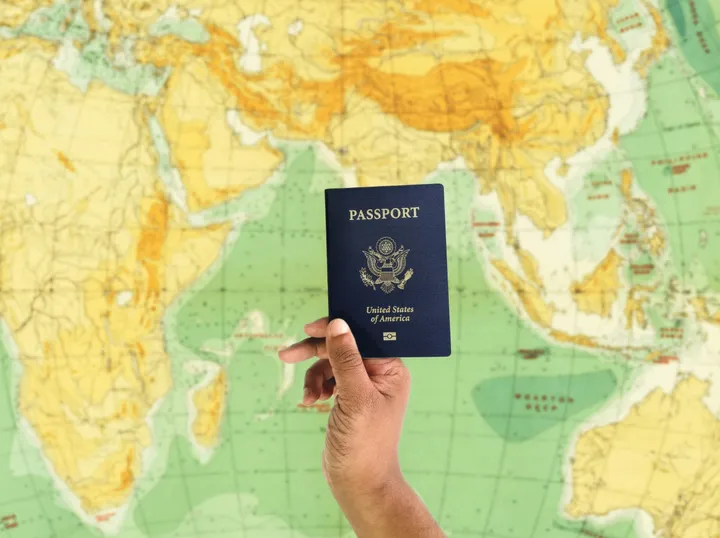
Spanish citizenship by residence, nacionalidad por residencia, opens to Americans after 10 years of legal, continuous residence in Spain immediately before the application, under article 22 of the Civil Code. The shorter periods of 1, 2 and 5 years in the same article cover other situations: marriage to a Spaniard, birth in Spain, Ibero-American nationality or refugee status. The file goes to the Justice Ministry rather than to an immigration office, and it adds two exams, a criminal record covering the whole United States and an oath. This article is for informational purposes only and is not immigration or legal advice; verify current requirements with the relevant Spanish authority or a licensed professional.
What sinks a ten-year nationality file?
The Civil Code requires residence that is legal, continuous and immediately before the application, plus good civic conduct and a sufficient degree of integration into Spanish society. The Minister of Justice may refuse for reasoned motives of public order or national interest. Five points can undo years of waiting.
- Study years. Spain’s immigration law admits students “en régimen de estancia”, a stay rather than residence, and no official page cited here says whether study years count toward the 10. The cautious plan counts from your first residence authorization and takes study years to a licensed professional; the stay itself is covered in the Spain student visa guide.
- Time abroad. The Civil Code asks for continuous residence, but neither the code nor the ministry’s pages set a limit on absences for nationality. The 6-month and 10-month limits of long-term residence belong to a separate procedure.
- A state record. The annex of the ministry’s order names the United States among the federal states whose criminal record certificate must cover the whole country. Where no nationwide certificate is issued, it asks for one from each state you lived in during the 5 years before applying. It names no issuing agency.
- An expired document. Everything must be valid on the filing date: a criminal record certificate with no stated validity lasts 6 months from issue, and a CCSE certificate 4 years from its date.
- The clocks after filing. A year of silence means refusal, and a grant lapses unless you appear before the competent official within 180 days of its notification.
From the tenth year to the Civil Registry: the legal clocks
Most stages run on a clock set by the Civil Code, Royal Decree 1004/2015 (the regulation) or Order JUS/1625/2016 (the ministry’s order).
| Stage | Legal clock | Where the rule sits |
|---|---|---|
| Residence | 10 years, legal and continuous, immediately before you apply | Civil Code, article 22 |
| CCSE pass certificate | Valid 4 years from its date | Order, article 10.4 |
| Criminal record certificate | Valid on the filing date; 6 months from issue if it shows no validity | Order, annex |
| Online draft | 2 months from creation to sign and file, or it is deleted | Justice Ministry e-office |
| Incomplete file | 3 months to correct it, or the application is treated as withdrawn | Order, article 7.3 |
| Decision | 1 year from entry at the Directorate General; silence means refusal | Royal Decree 1004/2015, article 11.3 |
| Appeal for reconsideration | Optional: 1 month from an express refusal, any time after a deemed refusal | Law 39/2015, article 124 |
| Court challenge | 2 months from notification, or 6 months from a deemed refusal | Order, article 13 |
| Oath and renunciation | 180 days, counted from the day after notification | Civil Code, article 21.4; Royal Decree, article 12.1 |
| Registration | Within 5 days of the oath | Royal Decree, article 13.1 |
| Surnames | 2 months to declare that you keep yours | Civil Registry regulation, article 199 |
Two clocks can stop: correcting a file suspends the one-year decision clock, the order says, and asking a notary for the oath suspends the 180-day lapse while the request is handled, under a Justice Ministry instruction of December 22, 2021.
Who needs 10 years, and who needs less
Article 22 of the Civil Code sets 10 years as the general rule, and U.S. nationality does not shorten it. Refugees need 5 years. Nationals of origin of the Ibero-American countries, Andorra, the Philippines, Equatorial Guinea or Portugal, and Sephardim, need 2. One year is enough for a person born in Spain, the spouse of a Spaniard married for 1 year or the widow or widower of one, if not separated, a person born abroad to a parent or grandparent who was originally Spanish, and a few other listed cases. The residence must still be legal, continuous and immediately before the application.
For Americans born in Puerto Rico: the Justice Ministry counts Puerto Rico as Ibero-American for the renunciation exemption, but the official pages cited here do not say whether that shortens the residence period, so ask the ministry before relying on 2 years.
The file the ministry’s order lists
The Justice Ministry, officially the Ministry of the Presidency, Justice and Relations with the Cortes, lists the documents on its application page, and the order’s annex adds the validity rules. An adult files:
- the application form and proof that the fee was paid;
- the TIE, covered in the TIE guide, or an EU family member card or registration certificate;
- the full, valid U.S. passport, matching the nationality on your residence card, and the previous one depending on the residence period, with copies of every page;
- the birth certificate, legalized and translated (neither the order nor the ministry’s pages set a maximum age for it);
- the nationwide criminal record certificate, legalized and translated, or a consular conduct certificate based on a check with the home country’s authorities;
- the marriage certificate, if you are married;
- the DELE and CCSE diplomas, or the form’s authorization for the ministry to check them.
The form also carries your consent to checks with Spain’s Central Criminal Records, the INE for your padrón data, the Instituto Cervantes and the immigration databases. Without it, you file the certificates yourself, including the padrón certificate from your town hall described in the empadronamiento guide.
Apostille and sworn translation
The ministry’s notice on legalization describes the Hague apostille as its simplified form, a single stamp and signature, without listing the countries that use it. Translations are made or checked at a Spanish consulate, or made by a sworn translator-interpreter appointed by Spain’s Foreign Ministry.
The two exams
Royal Decree 1004/2015 requires the DELE at level A2 or higher and the CCSE on Spain’s Constitution and sociocultural values, both run by the Instituto Cervantes. The 20 nationalities exempt from the DELE leave out the United States but include Puerto Rico. When the exempt nationality is not the one on your residence card, the order asks for a valid passport of that country or a consular certificate of that nationality, and the official pages cited here do not say what a U.S. citizen born in Puerto Rico can show. The CCSE applies to all 20. An official Spanish certificate at level A2 or above from the education authorities, such as an Escuela Oficial de Idiomas, replaces the language test; a compulsory secondary education (ESO) diploma earned in Spain replaces both; any other waiver must be decided before you file. Details are in the DELE A2 and CCSE guide.
Filing online or at a registry office
On the ministry’s e-office, the application sits under online filing with a digital certificate and needs the AutoFirma signing application. A draft must be signed and filed within 2 months of its creation, or it is deleted. The e-office labels only the waiver request as available with Cl@ve, the government login, so plan on a digital certificate for the application itself. Filing gives you a receipt and a file number. A paper application can go to any of the places listed in article 16.4 of Law 39/2015, such as a registry assistance office or a post office.
The fee is paid before you file, on form 790 code 026, at a bank that collaborates with the Agencia Tributaria and always in the applicant’s name. Payment in person is accepted only in Spain and only from holders of an NIE or DNI. The ministry’s form page gives 104.05 euros. Law 19/2015 sets 100 euros, due whatever the outcome, and the ministry’s page on nationality by residence says budget laws can revise the amount. Plan on 104.05 euros and check the form page the week you pay, since the ministry’s pages carry no update date.
While the ministry decides
Every file carries a mandatory Interior Ministry report on your conduct and immigration situation, Royal Decree 1004/2015 says. A missing document gives you 3 months to correct the file. The ministry must decide and notify within 1 year of the file’s entry at its Directorate General, or the application is deemed refused; the ministry’s pages give this legal maximum, not an average processing time.
The e-office status page, reached with your file number and NIE, shows the stage and the electronic original of a notified grant, but it does not count as a notification. Under article 13 of the order, a refusal can go to an optional appeal for reconsideration (recurso de reposición) or straight to the Audiencia Nacional. Under Law 39/2015, the appeal is due within 1 month of an express refusal and can be filed at any time after a refusal by silence; an appeal left unanswered for 1 month counts as rejected, the order adds. The court deadlines are in the table above.
After the grant: 180 days to swear, renounce and register
A grant lapses if you have not appeared before the competent official within 180 days of notification, the Civil Code says, and Royal Decree 1004/2015 counts them from the day after. The order has you ask the Civil Registry of your Spanish domicile for the oath yourself.
Where. The Royal Decree and the order name only the Civil Registry. Since April 30, 2021, article 68.3 of the Civil Registry Law adds a notary, or a diplomatic or consular officer in charge of the Civil Registry, and the Justice Ministry’s page offers the Civil Registry or a notary. Under the December 2021 instruction, the notary of the Spanish domicile shown in the grant records the oath in a public deed.
The 190 days. A circular of March 5, 2021 tells registries to question the deadline only if more than 190 days (180 plus 10 for notification), counted from the day after the date of the grant, have passed when you ask for the appointment, and to treat it as suspended when no appointment is available. That is practice, not law: plan on 180 days from notification and ask early. For a file lodged online or through Geiser, the system registry offices use, the circular lists the originals of the birth and criminal record certificates to bring with the grant; they need not still be valid. For a paper file numbered 300,000 to 499,999, whose originals the administration checked when it scanned them, the grant comes with an authentic copy of the birth certificate, and those two are all you bring.
What you declare. Anyone over 14 who can make a declaration swears or promises loyalty to the King and obedience to the Constitution and the laws, then declares that they renounce their previous nationality. The Civil Code exempts natives of the Ibero-American countries, Andorra, the Philippines, Equatorial Guinea and Portugal, and Sephardim of Spanish origin; the ministry’s application page adds countries with a dual nationality agreement. Neither covers the United States. What the declaration means under U.S. law is taken up in the dual citizenship guide. Under article 25 of the Civil Code, a naturalized Spaniard who uses only the renounced nationality for 3 years loses Spanish nationality.
Registration and name. The Civil Registry records the acquisition within 5 days of the declarations. The order still describes a good conduct check until then, although the Supreme Court annulled the matching phrase of the regulation on July 15, 2024. Spanish law also requires one given name and two surnames: a naturalized Spaniard keeps surnames in another form only by declaring it at acquisition or within 2 months, the ministry’s page on steps after nationality says.
Start the file in your ninth year
In your ninth year, list every permit you have held with its dates and check that no gap and no study stay sits inside the 10 years. Then book the DELE A2 and the CCSE, and order the nationwide criminal record certificate last, so it is still valid on the day you file.
An applicant with 10 unbroken years on residence permits, a clean record, passed exams and a digital certificate can file alone online. Get advice first if study years or long stays abroad fall inside the 10 years, if you have a criminal record in any country, or after a refusal or a year of silence, when the appeal deadlines in the table start to run.
The Spain Navigator puts every step of your move to Spain in order, from the visa to settling in.
FAQ
Do my years on a student stay count toward the 10 years?
The official pages cited here do not answer it. Spain's immigration law admits students under a stay regime rather than residence, the Civil Code asks for legal residence, and the Justice Ministry's pages do not address study years. The cautious plan counts from your first residence authorization and gets professional advice before filing if study time is part of your total.
Do Americans have to renounce U.S. citizenship?
Spain requires the declaration. The Civil Code spares only natives of Ibero-American countries, Andorra, the Philippines, Equatorial Guinea and Portugal, and Sephardim of Spanish origin, so an American declares the renunciation at the oath. What that declaration changes under U.S. law is a U.S. question the Spanish pages do not address. On the Spanish side, a naturalized Spaniard who uses only U.S. nationality for 3 years loses Spanish nationality.
How much does the application cost?
The Justice Ministry's form page gives 104.05 euros, paid on form 790 code 026 before you file and always in the applicant's name. Law 19/2015 says 100 euros, and the ministry explains that budget laws can revise the amount. The fee is due whatever the outcome and does not include the prices of the DELE and CCSE exams, which follow the Instituto Cervantes rules.
What happens if the ministry does not answer within a year?
The application counts as refused by administrative silence once 1 year has passed from its entry at the Directorate General, not counting any time suspended for corrections. You can then file an optional appeal for reconsideration or go straight to the Audiencia Nacional within 6 months. The online status page is not a notification, so do not treat what it shows as a decision.
Can my children apply with me?
Yes. A child over 14 files assisted by a legal representative. For a child under 14, the representative first needs authorization from the Civil Registry of the domicile, under article 21 of the Civil Code. Minors under 18 are exempt from the DELE and CCSE and file school certificates instead, which are mandatory at school age. A child born in Spain needs only 1 year of legal, continuous residence.
Sources
Official pages this guide was checked against, with the date we last read them.
- Código Civil, texto consolidado
- Real Decreto 1004/2015. Reglamento del procedimiento para la adquisición de la nacionalidad española por residencia, texto consolidado
- Orden JUS/1625/2016, sobre la tramitación de los procedimientos de concesión de la nacionalidad española por residencia, texto consolidado
- Ley 19/2015, de medidas de reforma administrativa en el ámbito de la Administración de Justicia y del Registro Civil
- Ley 20/2011, del Registro Civil, texto consolidado
- Solicitud de nacionalidad española por residencia
- Nacionalidad española por residencia. Descarga del formulario 790 026
- Residencia. ¿Cómo se adquiere la nacionalidad española?
- Trámites a realizar tras la adquisición de la nacionalidad
- Tener la doble nacionalidad
- Consulta telemática de expedientes de nacionalidad española por residencia
- Nacionalidad española por residencia. Sede Electrónica del Ministerio de Justicia
- Circular de la Dirección General de Seguridad Jurídica y Fe Pública sobre los trámites de jura e inscripción de la nacionalidad española por residencia (5 de marzo de 2021)
- Instrucción de 22 de diciembre de 2021 de la Dirección General de Seguridad Jurídica y Fe Pública sobre las declaraciones de nacionalidad por residencia ante notario
- Solicitud de nacionalidad española por residencia presencial
- Advertencia. Legalización y apostilla de documentación para utilización en España
- Ley Orgánica 4/2000, sobre derechos y libertades de los extranjeros en España y su integración social, texto consolidado
- Ley 39/2015, del Procedimiento Administrativo Común de las Administraciones Públicas, texto consolidado